

Episode 15: Effective Email Follow-Ups: Ensuring Prompt Responses
 Listen on Apple Podcast
 Listen on Spotify
Transcript
Hello, everyone! Welcome to Episode 15 of Business English Made Easy. I’m Victoria, and today we’re focusing on a crucial skill in the business world: effective email follow-ups. Following up on emails can ensure that your communications are acknowledged and that tasks are completed on time. Let’s explore some key phrases and strategies to help you master the art of the follow-up email.
First, let’s talk about the timing. Sending a follow-up too soon can seem pushy, while waiting too long might make your request seem less important. Typically, waiting three to five days is a good rule of thumb. If it’s an urgent matter, a quicker follow-up may be necessary.
When starting your follow-up email, always be polite and refer to your previous email. For example, you can start with, I hope this email finds you well. I am writing to follow up on my previous message sent on [date]. This provides context and reminds the recipient of your original email.
If you’re following up on a request or a task, be clear and direct about what you need. Use phrases like, I wanted to check on the status of… or Could you please provide an update on… This clearly indicates what you’re asking for without being too demanding.
For urgent follow-ups, it’s important to convey the urgency without sounding impatient. Try using phrases such as, As the deadline is approaching, could you please update me on… or Due to the time-sensitive nature of this matter, I would appreciate a prompt response. These phrases highlight the importance of your request while remaining respectful.
When following up on a meeting or appointment, reiterate the details to ensure there’s no confusion. For example, I am writing to confirm our meeting scheduled for [date] at [time]. Please let me know if you need to reschedule. This ensures that everyone is on the same page regarding the meeting arrangements.
If you need to remind someone about a previous agreement or decision, do so politely. Use phrases like, I would like to remind you about our agreement on… or As we discussed earlier, I am expecting… These reminders can help ensure that commitments are honored.
Sometimes, it’s necessary to express disappointment if a response is significantly delayed, but always do so diplomatically. You could say, I understand you are busy, but I am concerned about the delay in response regarding… This acknowledges their busy schedule while emphasizing the importance of your request.
Closing your follow-up email effectively is just as important as the opening. Reiterate your request and thank the recipient for their attention. Phrases like, Thank you for your prompt attention to this matter, or I appreciate your help and look forward to your response, leave a positive impression and encourage a timely reply.
To make sure your follow-up emails hit the mark, scroll up to download our worksheet. It’s packed with examples and exercises to help you craft effective follow-up emails that get results.
Thank you for joining me in today’s episode of Business English Made Easy. Remember, following up is an essential part of professional communication. With the right approach, you can ensure your emails are noticed and acted upon. Stay curious, keep learning, and I’ll see you in the next episode. Goodbye!
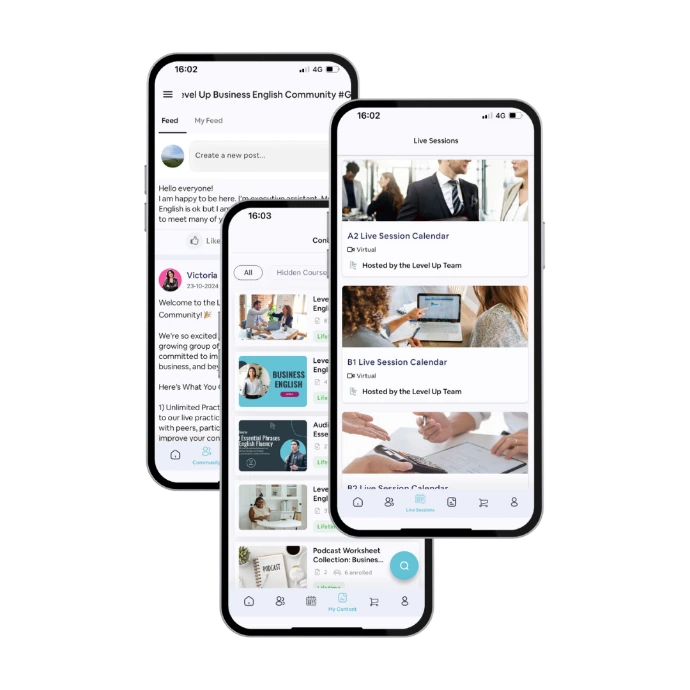
Tous vos outils pour progresser en anglais pro, réunis ici.
Exercices, fiches pratiques et support – tout dans une application conçue pour vous accompagner.
Découvrez l'application