

Episode 31: 10 Phrasal Verbs You Need for Team Collaboration and Problem-Solving
 Listen on Apple Podcast
 Listen on Spotify
Transcript
Hi there, and welcome back to Business English Made Easy! I’m Victoria, and I’ve got a practical and exciting episode for you today. We’re going to dig into 10 phrasal verbs that will take your team collaboration and problem-solving skills to the next level.
Phrasal verbs can feel a little tricky—they’re casual but essential. They show up in emails, meetings, and brainstorming sessions all the time. Mastering them will help you communicate naturally and confidently with your colleagues, no matter where you work.
Here’s the game plan for today:
1. We’ll go over 10 must-know phrasal verbs that are perfect for teamwork and solving challenges.
2. I’ll share examples of how to use them in real business situations.
3. And, of course, I’ll sprinkle in some tips to help you avoid common mistakes.
By the end of this episode, you’ll be able to confidently integrate these phrasal verbs into your daily work conversations, sounding polished and professional. Let’s jump in.
Why Phrasal Verbs Matter for Collaboration
Let’s start with this: Why are phrasal verbs such a big deal in team collaboration?
Phrasal verbs are like the secret handshake of fluent English speakers. They’re everywhere.
For example, imagine you’re leading a brainstorming session, and you need to guide your team toward actionable ideas. You might say, Let’s narrow down the options, or We’ll need to follow up on this next week. These are phrases that people naturally use, and knowing them puts you on the same wavelength as your team.
Here are 10 phrasal verbs that are indispensable for collaboration and problem-solving. I’ll break them into categories so they’re easier to remember.
1. Phrasal Verbs for Generating Ideas
• Kick off: This means to start something, like a meeting or project.
Example: Let’s kick off the brainstorming session with some quick ideas.
• Bounce around: This means to share and exchange ideas informally.
Example: We spent the afternoon bouncing around ideas for the new campaign.
2. Phrasal Verbs for Decision-Making
• Narrow down: This means to reduce a list of options to focus on the most important ones.
Example: We need to narrow down our choices to the top three candidates.
• Run by: This means to get someone’s approval or feedback.
Example: I’ll run the proposal by the manager before we finalize it.
3. Phrasal Verbs for Problem-Solving
• Work out: This means to find a solution.
Example: We’ll need to work out a plan to handle the budget cuts.
• Iron out: This means to resolve minor issues or details.
Example: Let’s iron out the logistics before the product launch.
4. Phrasal Verbs for Following Up
• Follow up: This means to check in or continue a discussion or task.
Example: Can you follow up with the supplier to confirm the delivery date?
• Touch base: This means to briefly check in with someone.
Example: Let’s touch base tomorrow to review the progress.
5. Phrasal Verbs for Wrapping Up
• Wrap up: This means to finish or conclude something.
Example: We’ll wrap up the meeting after we finalize the agenda.
• Sum up: This means to summarize key points.
Example: Let me sum up the main takeaways from today’s discussion.
How to Use These Verbs in Real-Life Scenarios
Let’s bring these phrasal verbs to life with a real-world example. Imagine you’re leading a project meeting. Here’s how you might naturally use them:
• Let’s kick off the meeting by bouncing around some ideas for the new campaign.
• Once we narrow down our options, I’ll run them by the marketing team for feedback.
• If there are any issues, we’ll work them out and iron out the details by next week.
• Don’t forget to follow up with the client and touch base with the design team.
• Before we wrap up, let me sum up the action points so we’re all aligned.
See how seamless and professional that sounds?
Practice Makes Perfect
Here’s your challenge for today. Think about your next meeting, email, or conversation. Choose two or three phrasal verbs from this list and try to use them naturally.
For example, if you’re assigning tasks, you might say:
• Can you follow up with the vendor by Friday?
• Let’s touch base on Monday to review where we’re at.
If you’d like more practice, I’ve created a worksheet with examples and exercises to help you master these verbs. You can download it at the top.
Let’s Wrap It Up
Phrasal verbs are one of the most effective tools for natural communication. Whether you’re brainstorming, solving problems, or following up, the right phrasal verbs can make your language more engaging.
Start small—pick one or two from today’s list and work them into your conversations. The more you practice, the more confident you’ll feel.
If you found this episode helpful, share it with a colleague or friend who’s working on their English skills. And don’t forget to grab the worksheet for extra practice—it’s packed with examples to get you started.
Thanks for tuning into Business English Made Easy. I’ll see you in the next episode!
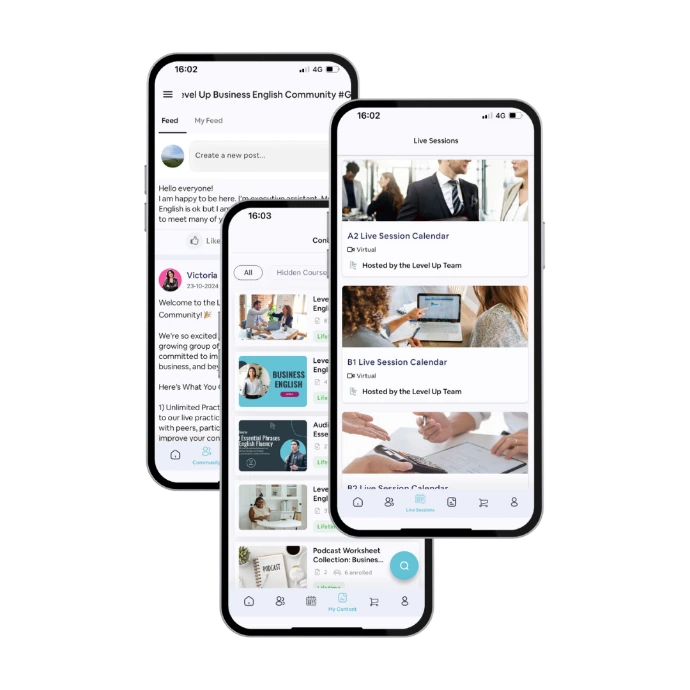
Tous vos outils pour progresser en anglais pro, réunis ici.
Exercices, fiches pratiques et support – tout dans une application conçue pour vous accompagner.
Découvrez l'application