
Episode 17: Future Perfect Tense: Planning and Forecasting in Business English
 Listen on Apple Podcast
 Listen on Spotify
Transcript
Hello, everyone! Welcome back to Business English Made Easy. I’m your host, Victoria, and this is Episode 17. Today, we’re looking into the Future Perfect tense, a powerful tool for planning and forecasting in business English. Understanding how to use this tense will help you communicate more precisely about future events and deadlines. Let’s explore how you can incorporate the Future Perfect tense into your professional vocabulary.
First, let’s define the Future Perfect tense. The Future Perfect tense is used to describe an action that will be completed by a specific point in the future. The structure is will have + past participle. For example, By the end of the month, we will have completed the project. This sentence indicates that the project will be finished before the month ends.
Now, let’s look at some common business scenarios where the Future Perfect tense is useful.
Scenario 1: Project Deadlines
Imagine you’re discussing project timelines in a meeting. You might say:
By next Friday, we will have finished the first phase of the project.
By the time we launch the new product, we will have completed all the testing.
These sentences clearly communicate that certain tasks will be completed by specific deadlines.
Scenario 2: Financial Forecasting
In financial meetings, you might need to forecast future results. For instance:
By the end of the quarter, we will have achieved a 10% increase in sales.
By next year, we will have reduced our operating costs by 15%.
Using the Future Perfect tense here helps specify when these financial goals are expected to be met.
Scenario 3: Staff Training and Development
When discussing training programs, you can outline what will be accomplished by certain dates:
By the end of this training session, all employees will have learned the new software.
By the next quarter, our team will have completed the leadership development program.
These statements ensure everyone knows the timeframe for achieving training goals.
Scenario 4: Event Planning
Event planning often requires clear communication about timelines. For example:
By the time the conference starts, we will have prepared all the materials.
By the end of the week, we will have confirmed all the speakers.
These sentences help coordinate event preparations efficiently.
How to Form the Future Perfect Tense
To form the Future Perfect tense, use will have followed by the past participle of the main verb. Here are some examples:
Finish becomes will have finished.
Complete becomes will have completed.
Achieve becomes will have achieved.
Learn becomes will have learned.
Let’s practice with a few more examples:
By 5 PM today, I will have sent all the emails.
By the end of this year, we will have opened three new stores.
By the time you arrive, they will have already started the meeting.
Why Use the Future Perfect Tense?
The Future Perfect tense is particularly useful for planning and forecasting because it sets clear expectations about when tasks will be completed. It helps avoid misunderstandings by providing specific timeframes for when actions will be finished. This clarity is crucial in business settings, where deadlines and timelines are essential.
Common Mistakes to Avoid
When using the Future Perfect tense, avoid these common mistakes:
Incorrect Structure: Make sure to use will have + past participle. For example, By Monday, we will have finish the report is incorrect. The correct form is By Monday, we will have finished the report.
Vague Timeframes: Be specific about the future point in time. For example, We will have completed the task soon is less clear than We will have completed the task by next Wednesday.
Overuse: Use the Future Perfect tense when it’s necessary to specify that an action will be completed by a certain time. Overusing it can make sentences sound complicated.
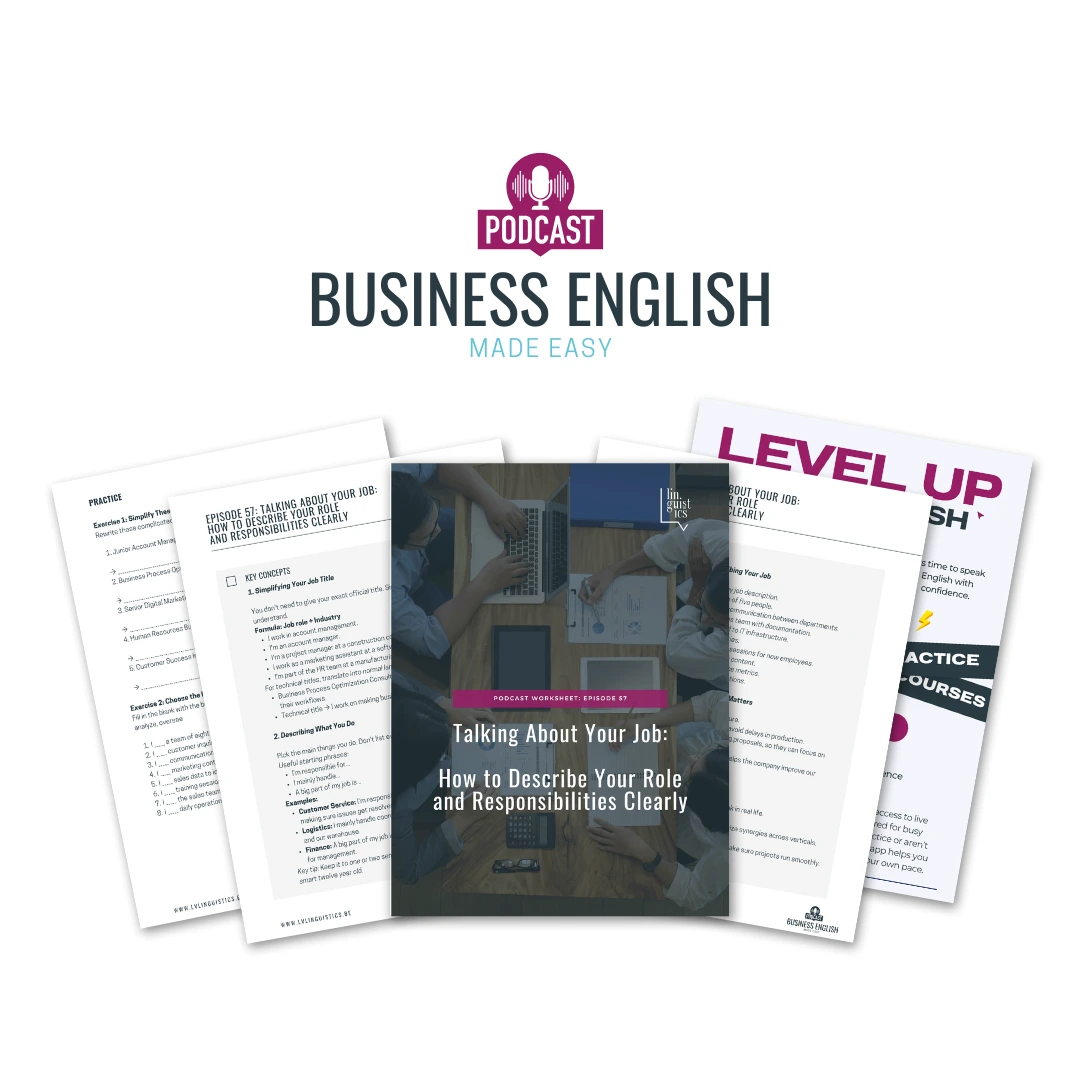
For more practice with the Future Perfect tense, scroll to the top and download our worksheet. It includes exercises to help you master this tense and apply it confidently in your business communications.
Thank you for joining me in today’s episode of Business English Made Easy. Stay curious, keep learning, and I’ll see you in the next one. Goodbye!
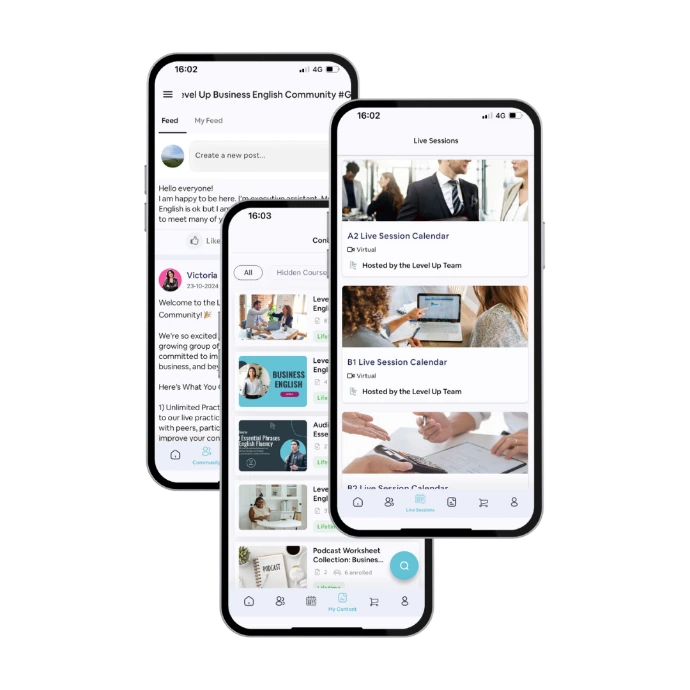
Tous vos outils pour progresser en anglais pro, réunis ici.
Exercices, fiches pratiques et support – tout dans une application conçue pour vous accompagner.
Découvrez l'application