
Episode 37: Pitch Your Ideas Part 3: Closing with Impact
 Listen on Apple Podcast
 Listen on Spotify
Transcript
Hi there, and welcome back to Business English Made Easy! I’m Victoria, and today we’re wrapping up our three-part series on crafting a persuasive business pitch.
In Part 1, we focused on opening your pitch with a strong hook, establishing context, and building credibility. In Part 2, we dove into the body of your proposal—defining the problem, presenting your solution, supporting it with evidence, and addressing objections.
Now, it’s time for the grand finale: the close.
The closing moments of your pitch are what your audience will remember most. This is your chance to reinforce your message, inspire confidence, and create a clear path for what happens next. A strong close doesn’t just summarize your proposal—it compels your audience to take action.
Here’s what we’ll cover in this episode:
1. How to summarize your key points without repeating yourself.
2. Crafting a clear and actionable call to action.
3. Using language that leaves a lasting impression.
Let’s dive in and make sure your pitch ends on a high note.
Step 1: Summarize Your Key Points
The first step in closing your pitch is to briefly recap the main points. Notice I said “briefly”—this isn’t about repeating everything you’ve already said. Instead, focus on reinforcing the most important ideas.
Example:
• To recap, we’ve identified inefficiencies in our supply chain that are increasing costs and frustrating customers. My proposed solution—a predictive analytics system—can reduce delivery times by 30% and save us over $500,000 annually. It’s a straightforward, actionable plan that positions us for long-term success.
Notice how this summary doesn’t introduce new information. It simply highlights the key elements of the pitch in a concise, confident way.
Language to use:
• Let’s quickly recap the key points…
• Here’s a brief summary of what we’ve covered…
• To sum up, the main takeaway is…
Step 2: Deliver a Clear Call to Action
A great pitch doesn’t just inform—it drives action. After summarizing your points, tell your audience exactly what you want them to do next. This could be approving a project, scheduling a follow-up meeting, or allocating resources.
Example:
• What I’m asking for today is your approval to move forward with this plan. With your support, we can begin the first phase of implementation next month.
• The next step is to schedule a follow-up meeting to discuss the budget and timeline. I’ll send out a proposal by the end of the week.
Language to use:
• What I’d like to propose is…
• The next step is…
• I’m asking for…
Make your call to action specific, actionable, and time-bound. Ambiguity can undermine an otherwise strong pitch.
Step 3: End with a Memorable Closing Line
Finally, close with a statement that leaves a lasting impression. This is your chance to inspire confidence and reinforce why your idea matters.
Example:
• This isn’t just about solving a current challenge—it’s about positioning us for future success. With your approval, we can take the first step toward transforming how we operate.
• I’m confident this solution will not only address our immediate needs but also create a stronger foundation for growth. I look forward to your feedback and am excited to take the next steps together.
Language to use:
• Together, we can achieve…
• I’m excited to move forward with…
• This is the first step toward…
A memorable closing line should feel natural and aligned with the tone of your pitch.
Example of a Complete Closing
Here’s how it all comes together:
To quickly recap, we’ve identified inefficiencies in our supply chain that are increasing costs and frustrating customers. My proposed solution—a predictive analytics system—can reduce delivery times by 30% and save us over $500,000 annually. What I’m asking for today is your approval to move forward with this plan. With your support, we can begin the first phase of implementation next month. This isn’t just about solving a current challenge—it’s about positioning us for long-term success. I’m excited to collaborate with you on this and look forward to taking the next steps together.
Notice how this closing reinforces the key points, provides a clear call to action, and ends on an optimistic note.
Your Challenge
This week, practice closing a pitch you’re working on—or even one you’ve imagined. Write out your summary, call to action, and closing line, and practice delivering it aloud. Pay attention to your tone and pacing to ensure you sound confident and composed.
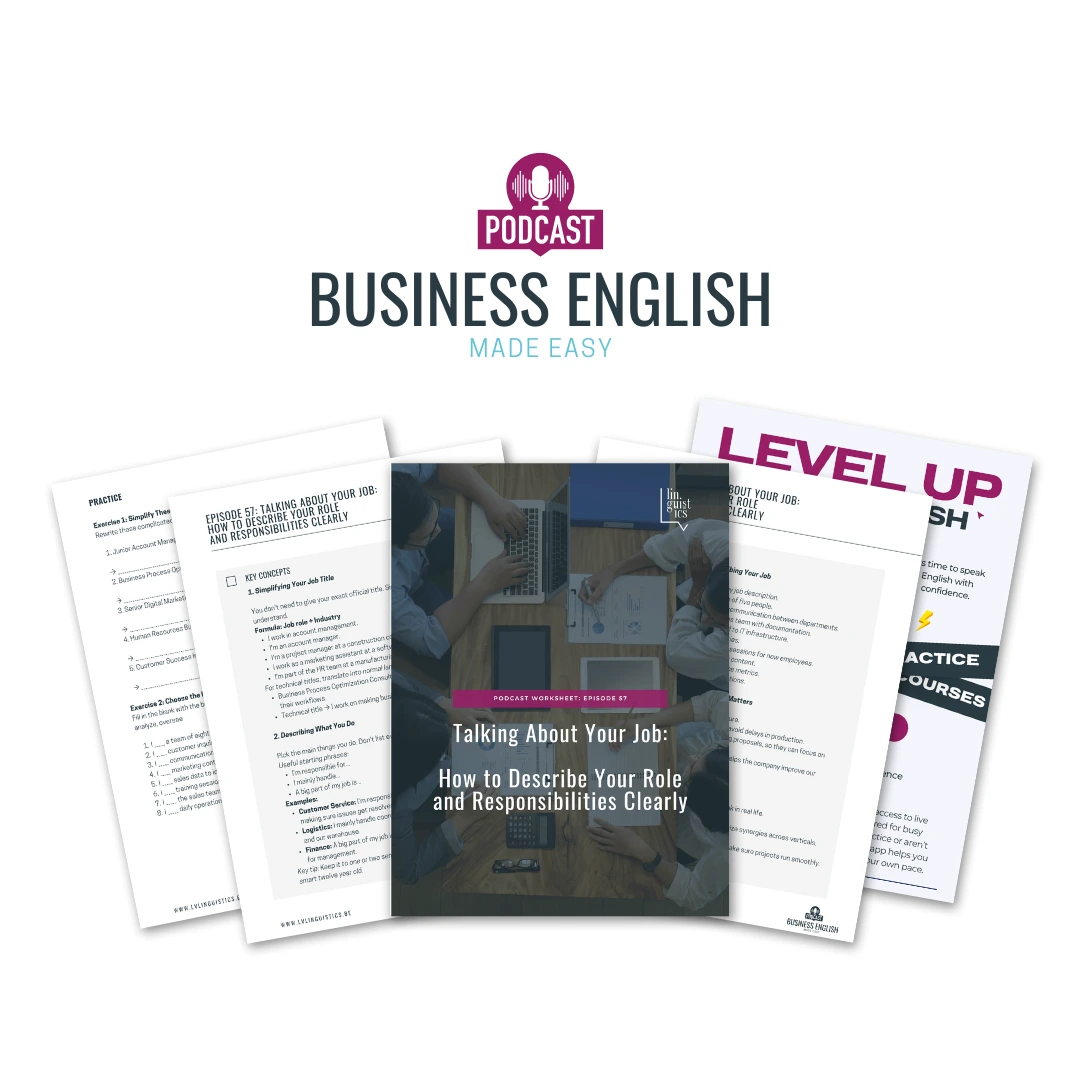
If you’d like more help, I’ve created a worksheet to guide you through crafting a strong close. You can download it at the top.
What’s Next?
That wraps up our series on pitching your ideas! If you missed the first two episodes, I highly recommend going back to listen—they cover everything from opening with impact to structuring the body of your proposal.
If you found this series helpful, share it with a colleague or friend who could benefit from these tips. And don’t forget to grab the worksheets for extra practice—they’re packed with tools to help you craft pitches that get results.
Thank you so much for joining me on Business English Made Easy! I’ll see you in the next episode!

Tous vos outils pour progresser en anglais pro, réunis ici.
Exercices, fiches pratiques et support – tout dans une application conçue pour vous accompagner.
Découvrez l'application