
Episode 33: Prepositions for Professionals: Fixing Common Mistakes in Business Emails
 Listen on Apple Podcast
 Listen on Spotify
Transcript
Hi there, and welcome back to Business English Made Easy! I’m Victoria, and today we’re tackling one of the sneakiest challenges in professional communication: prepositions in emails.
Now, let me ask you—have you ever paused while writing an email, wondering if it’s on the agenda or in the agenda? Or maybe you’ve written something like, attached with this email, only to realize later that it should have been attached to this email?
Prepositions are small but mighty. When you get them right, your emails feel polished and professional. When they’re wrong, it can lead to confusion or make your message look less credible.
In this episode, we’re going to focus on:
1. The most common preposition mistakes professionals make in emails and why they happen.
2. Clear examples to show you the right way to use prepositions in a business context.
3. Simple strategies to avoid these mistakes and feel confident every time you hit send.
By the end of this episode, you’ll have the tools you need to master prepositions and write emails that make the right impression.
Why Prepositions Are Tricky
Let’s start with why prepositions cause so much trouble. They don’t follow a lot of clear rules. For example:
• I’m at the office.
• I’m in the office.
Both are technically correct, but they mean slightly different things. At the office focuses on the general location, while in the office implies you’re inside the building.
Prepositions often depend on fixed phrases, which don’t always translate directly from other languages. That’s why even advanced English speakers can struggle with them. But here’s the good news: with practice, they become second nature.
Common Preposition Mistakes in Emails
Let’s jump into the most frequent mistakes I see in professional writing and how to fix them.
1. Interested in vs. Interested on
Wrong: I’m interested on learning more about your services.
Right: I’m interested in learning more about your services.
The correct pairing is always interested in.
2. Attached to vs. Attached with
Wrong: The document is attached with this email.
Right: The document is attached to this email.
The phrase is fixed—it’s always attached to.
3. On Friday vs. In Friday
Wrong: Let’s meet in Friday.
Right: Let’s meet on Friday.
Use on for days of the week and at for specific times, like on Friday at 3 PM.
4. Focused on vs. Focused in
Wrong: We’re focused in improving customer service.
Right: We’re focused on improving customer service.
The correct preposition here is always on.
5. Agree on vs. Agree to
Wrong: We agreed for the new budget.
Right:
• We agreed on the budget. (mutual decision)
• We agreed to the proposal. (giving consent)
Choose on for shared decisions and to for approvals or agreements.
Strategies to Fix Preposition Mistakes
1. Learn Fixed Phrases
Certain prepositions always pair with specific words. For example:
• Interested in
• Focused on
• Attached to
Keep a list of these common pairings handy until they feel natural.
2. Simplify Your Writing
If you’re unsure, rewrite the sentence. Instead of The document is attached to this email, try Please find the attached document.
3. Pay Attention to Patterns
Look at emails from colleagues or native speakers. You’ll notice consistent patterns in how they use prepositions.
Practice Makes Perfect
Here’s a quick exercise for you. Think about an email you’ve sent recently. Pick one sentence where you used a preposition and double-check if it was correct.
For example:
• Did you write Looking forward for your reply when it should have been Looking forward to your reply?
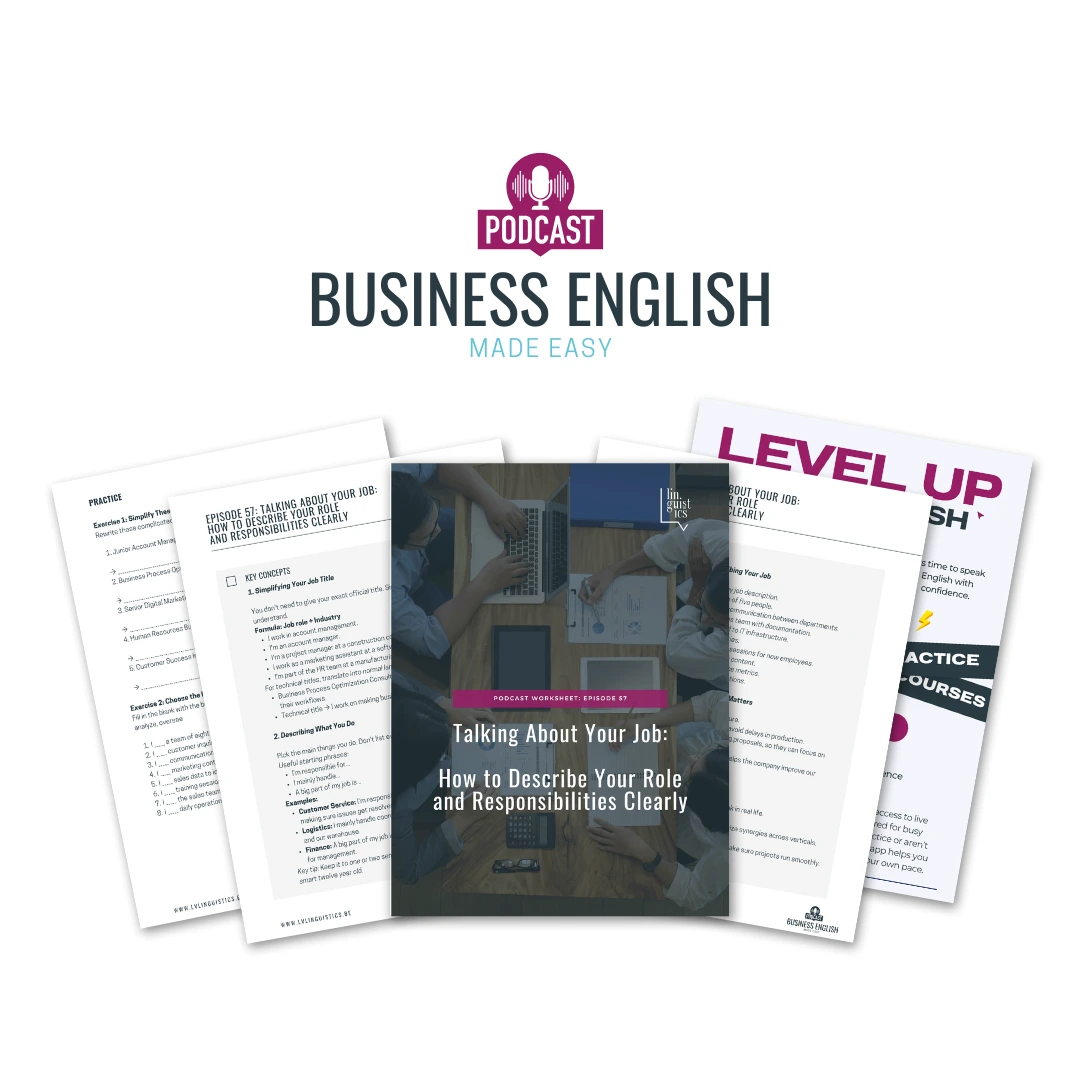
If you’re not sure, I’ve created a worksheet with common preposition phrases and exercises to help you practice. You can download it at the top.
Wrapping It Up
Prepositions might seem small, but they have a big impact on how professional your emails sound. By learning fixed phrases, simplifying your writing, and practicing regularly, you’ll write with confidence and clarity.
If you found today’s episode helpful, I’d love for you to share it with a colleague or friend. And don’t forget to grab the worksheet for extra tips and practice.
Thanks for listening to Business English Made Easy. I’ll see you next time!
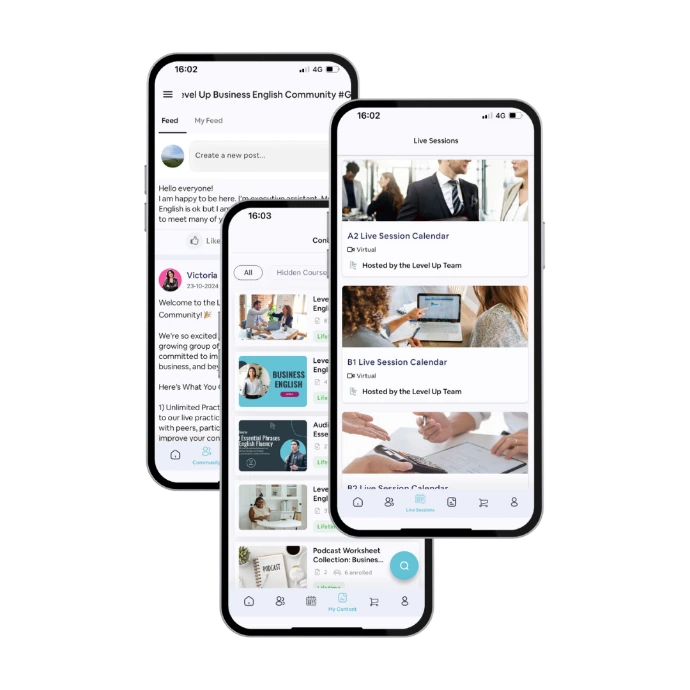
Tous vos outils pour progresser en anglais pro, réunis ici.
Exercices, fiches pratiques et support – tout dans une application conçue pour vous accompagner.
Découvrez l'application